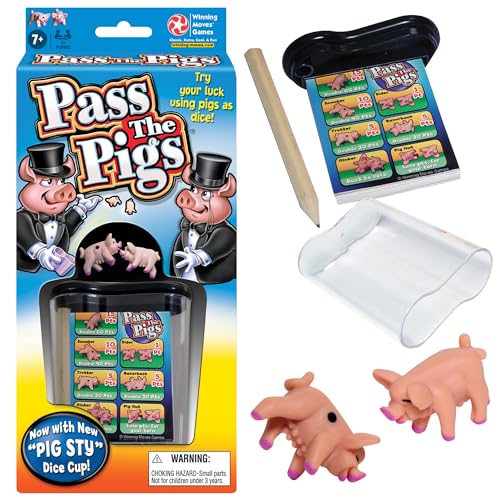
Pass the Pigs, Classic Edition
Roll a pair of little rubber swine and test your luck anywhere with the classic tabletop favorite that has been in print since the seventies.
$16.99
Two rubber pigs, no dice
This is the classic party game where you toss two small rubber pigs instead of dice. We collect the complete rules, every position, and a scorekeeper for your table right here.
Read the rulesOpen the scorekeeper
Boxes on the shelf
Browse the game editions in print, along with sturdy travel cases made by other companies to fit the small pocket boxes.
Roll a pair of little rubber swine and test your luck anywhere with the classic tabletop favorite that has been in print since the seventies.
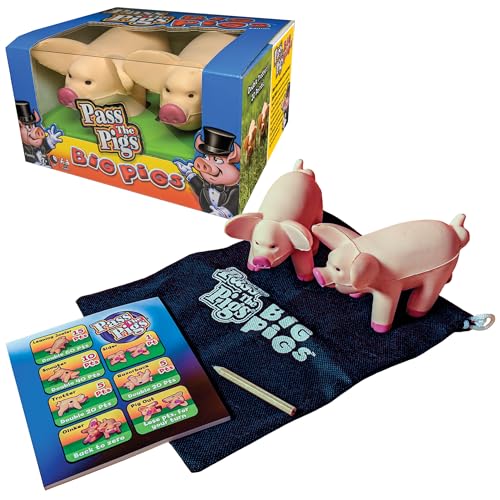
Toss giant foam swines on the lawn or living room rug with this super-sized edition built for outdoor gatherings and big spaces.
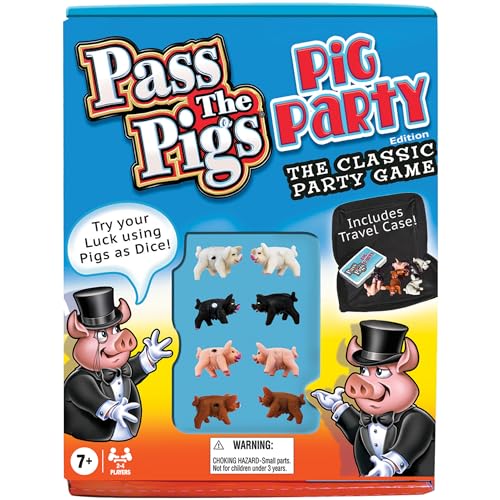
Gather up to four players for simultaneous tabletop action using four distinct pairs of rubber pigs and a special deck of cards.
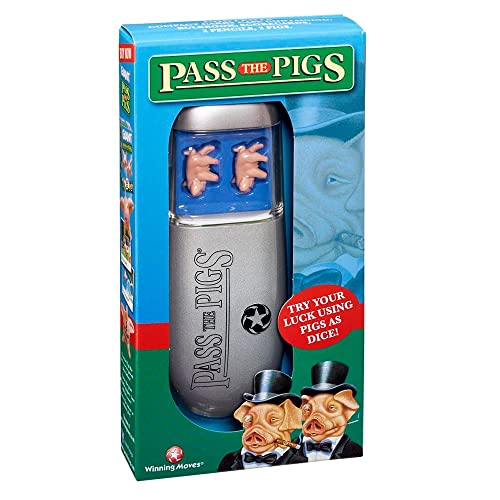
Toss two pig figures in this classic travel edition packed securely inside a sleek silver carrying case.
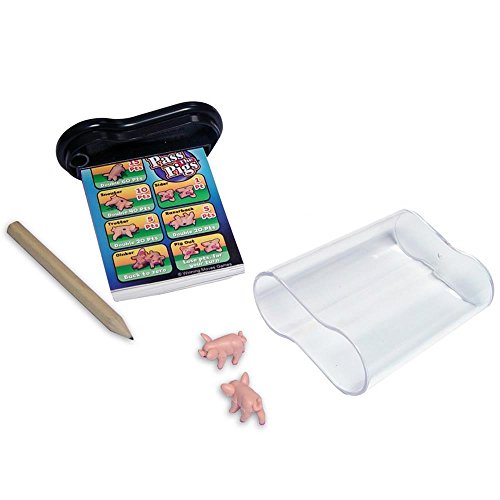
Roll your swine straight from the themed shaker cup in this timeless dice edition made for easy tabletop sessions.
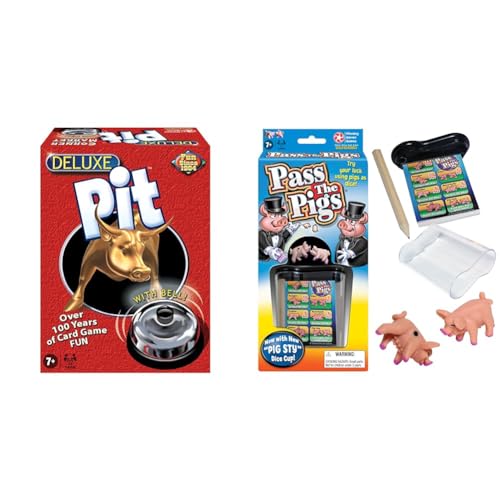
Double your family game night thrills with this energetic pairing of the beloved rubber pig tosser and the iconic trading card frenzy.
You toss two pig figures from a cup onto the table. Different landings earn different points, and you can keep rolling to build your turn. Press your luck too far and a bad toss wipes out every point from that round before you can bank it.
People love the game because anyone can play in seconds. The little porkers bounce and rest in strange poses that keep everyone laughing. You try to reach a hundred points first, balancing greedy rolls against the safe choice to pass the turn to the next player.
One minute, one turn
The rest of this page describes the game in writing. This is a minute of somebody doing it instead: a hand throwing the pigs, the pigs landing, the score going up. The video is not ours. It sits on YouTube, and nothing loads from YouTube until you press play, which is also why there is no still from the video here.
Winning Moves Australia
From the company that publishes the game, and the quickest way to watch a turn happen.
The scoring chart
Landings are worth different amounts. Check the chart below to see what each pair scores before you decide to toss again.
| Landing | One pig | Both pigs alike | Share of rolls |
|---|---|---|---|
| Sider (no dot) | 0 nothing on its own | 1 | 35% |
| Sider (dot) | 0 nothing on its own | 1 | 30.2% |
| Razorback | 5 | 20 | 22.4% |
| Trotter | 5 | 20 | 8.8% |
| Snouter | 10 | 40 | 3% |
| Leaning Jowler | 15 | 60 | 0.6% |
When it all goes wrong
Most rolls add points. These three take them away, and the difference between losing a turn and losing everything is worth knowing before somebody rolls one.
| Roll | What you see | What it costs |
|---|---|---|
| Pig Out | One pig on its dotted side and the other on its blank side. | the whole turn score |
| Oinker also called Makin Bacon | The two pigs come to rest touching each other. | your entire score |
| Piggyback | One pig lands on top of the other. | your place in the game |
How often each landing turns up
Counted over eleven thousand rolls of a single pig, the pattern barely moves. Two thirds of the time the pig just flops on a side. The landing everybody cheers for shows up less than once in a hundred rolls, which is exactly why the table reacts.
Made here, free to use
Track your match in your web browser or grab a fresh sheet to print out. Both helpers are free to use and require no account.
Every page in order
Browse the reference pages: how a turn runs, the house rules people play, the editions, and the glossary.